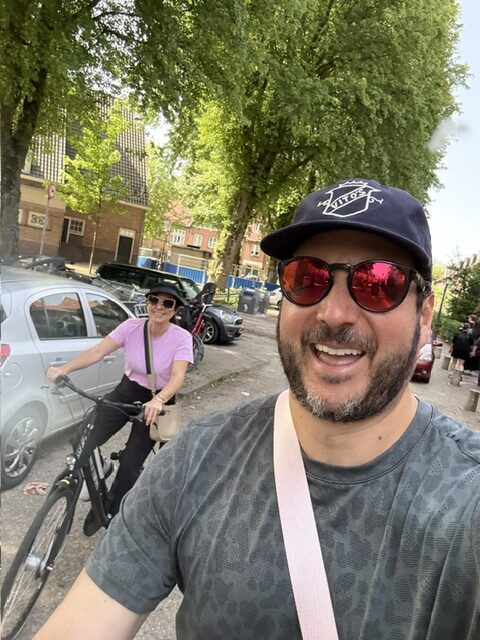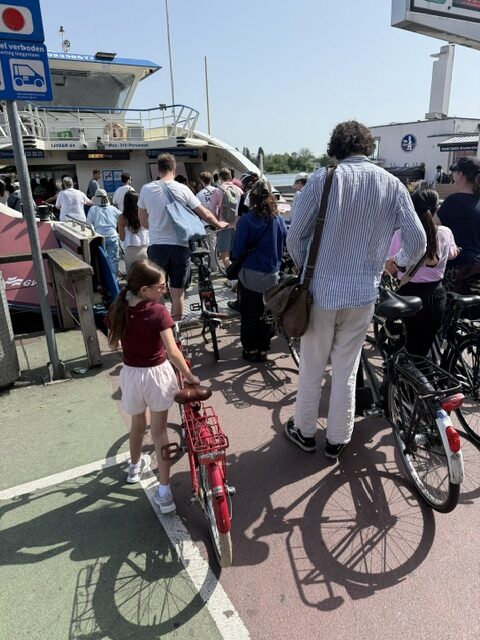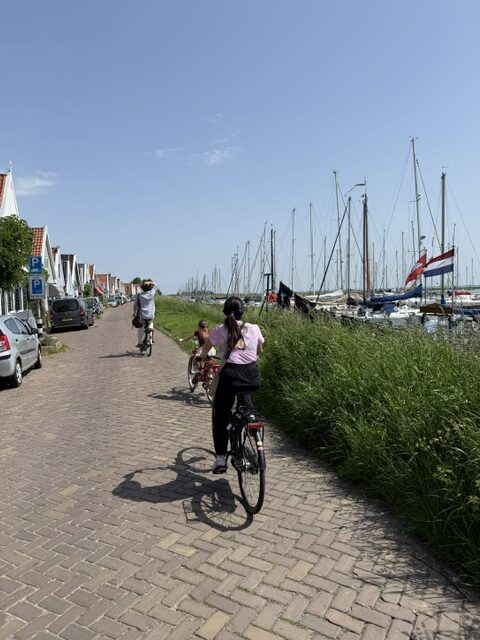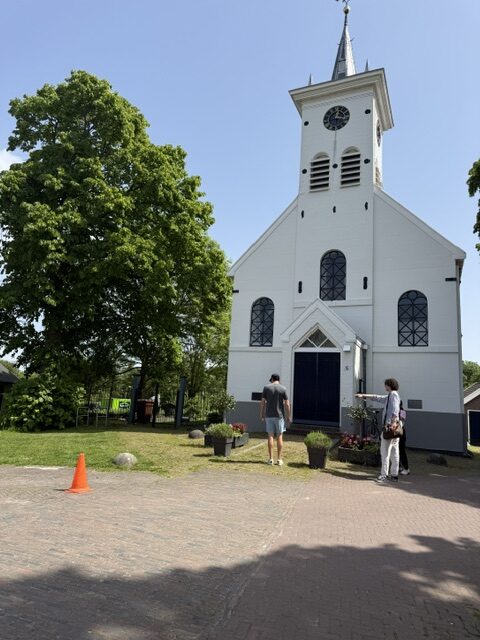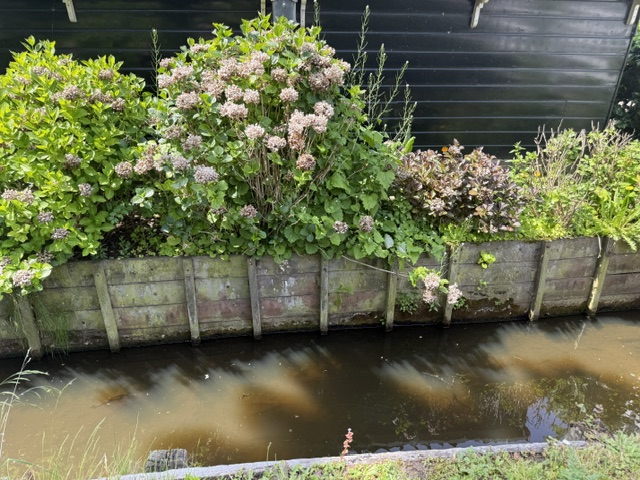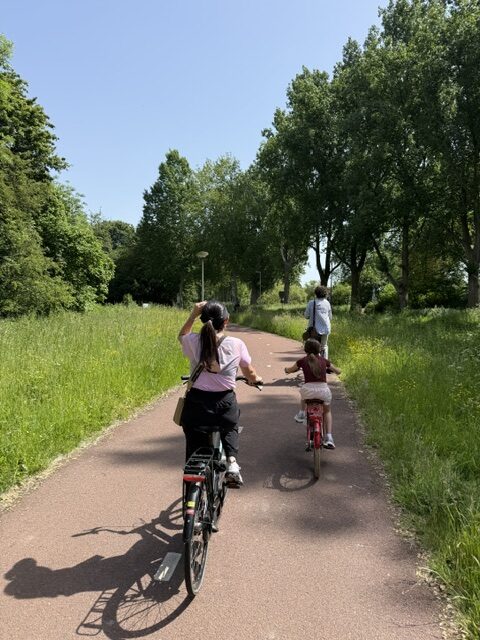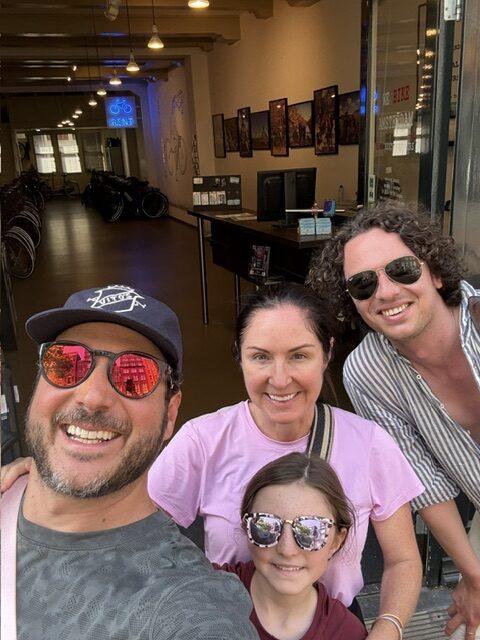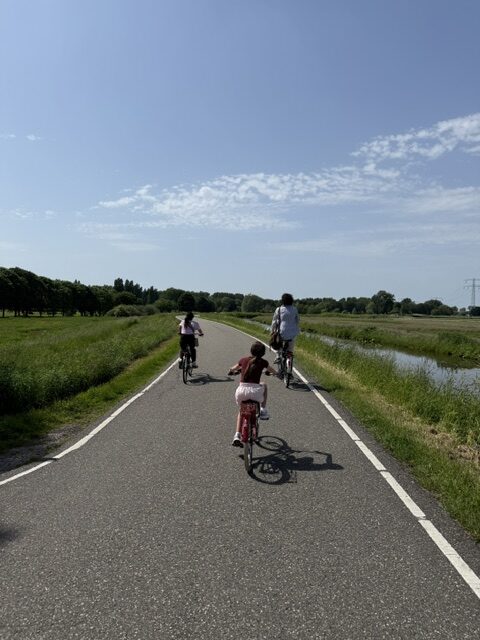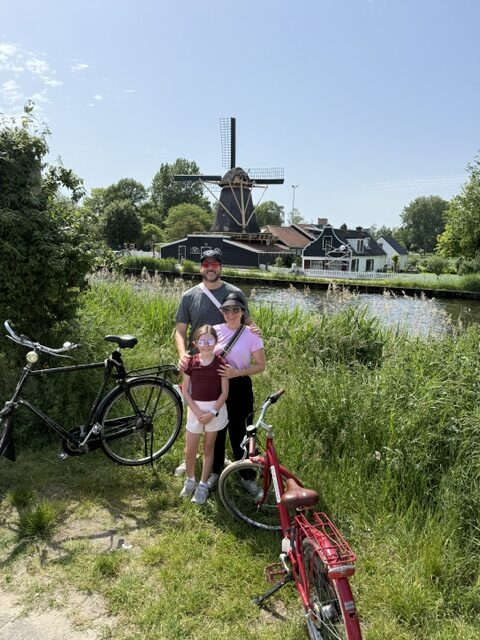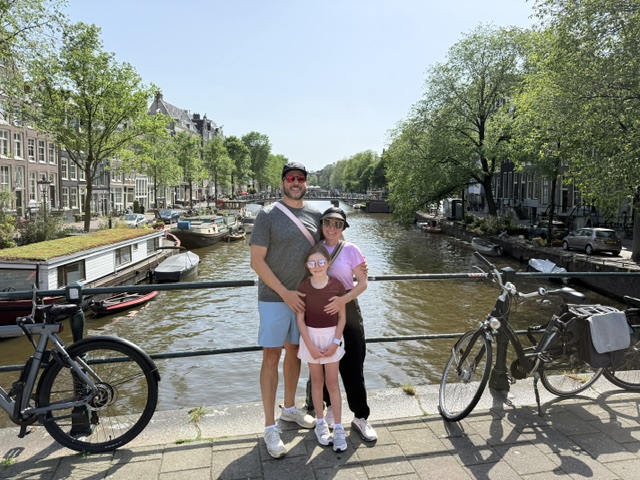


There may be no better way to understand Amsterdam than by bicycle.
We spent the day riding about 35 kilometers from the city into the Dutch countryside with We Bike Amsterdam, and it ended up being one of the highlights of the trip. The terrain was mostly flat, but the ride still felt like an adventure as we followed narrow bike paths, crossed bridges, and glided along the famous dikes that have literally shaped the Netherlands. Every few kilometers brought another story about how the Dutch engineered an entire civilization around water.
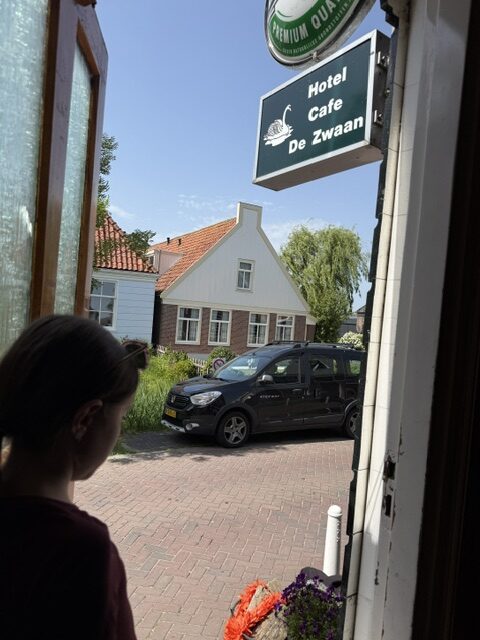
One of the most fascinating stops was a historic fishing village that once sat on open saltwater before the construction of the Afsluitdijk transformed much of the surrounding sea into freshwater. Our guide explained how the village changed once the water became brackish and fishing patterns shifted. It was one of those moments where geography, engineering, and history suddenly all clicked together.
We also learned that Amsterdam’s beautiful buildings are standing on surprisingly unstable ground. Much of the region sits on peat, which is soft, wet, and constantly shifting. To keep buildings upright, generations of Dutch builders drove enormous wooden beams deep into the earth to create foundations. In a way, entire forests disappeared beneath the city just to hold Amsterdam up.
That engineering mindset seems to define the Netherlands. Nothing about the landscape feels accidental. The dikes, canals, locks, and reclaimed land all reflect centuries of persistence against the sea. In some ways, the Dutch are already centuries ahead in the global warming conversation because they have been battling rising water, flooding, and land management since the country’s inception. While much of the modern world is only beginning to think seriously about resilience and water control, the Netherlands has been refining those systems for generations.
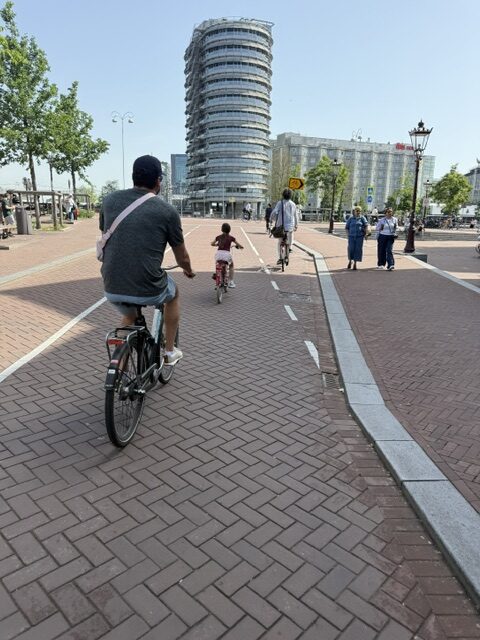
One thing that felt very strange to us as Americans was the near-total absence of bike helmets. People of all ages — business professionals, grandparents, teenagers, parents carrying multiple children — ride everywhere without them. At first it seemed reckless, but it quickly became clear that the reason is infrastructure and culture. Bikes genuinely have the right of way in many situations, drivers expect them, and the entire transportation system is designed around keeping cyclists safe. It still felt weird to us, though, especially weaving through Amsterdam traffic without the defensive mindset that comes naturally in the United States.
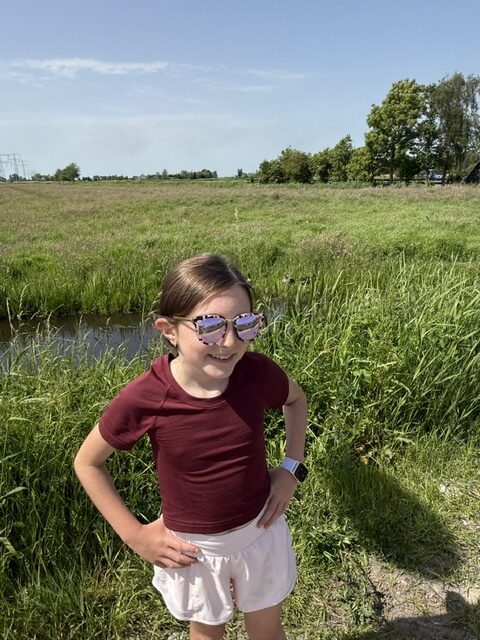
The ride itself was wonderfully relaxed. We stopped only briefly for a grilled cheese sandwich for Josephine and a few historical explanations along the route. Otherwise, we just kept pedaling through green fields, tiny villages, grazing sheep, and endless water views. The countryside felt calm and open in a way that contrasted perfectly with Amsterdam’s busy canals and museums.
Josephine handled the ride like a pro. Fortunately, she had already been preparing for Dutch cycling culture thanks to all the biking she’s done in Florida. Thirty-five kilometers is no joke for a nine-year-old, but she powered through it with only the expected end-of-day exhaustion.
What makes cycling in the Netherlands so special is not just that people ride bikes — it’s that the entire country is designed around them. Protected bike lanes aren’t a novelty. They’re simply infrastructure. Families ride together, older couples cruise through villages, commuters carry groceries on cargo bikes, and children pedal independently without anyone thinking twice about it.
By the end of the day, we were tired in the satisfying way that comes from spending hours outdoors seeing a place at human speed. You notice more on a bicycle. You hear more. You stop more easily. And in the Netherlands, you start to understand why the bike is not just transportation — it’s part of the culture itself.