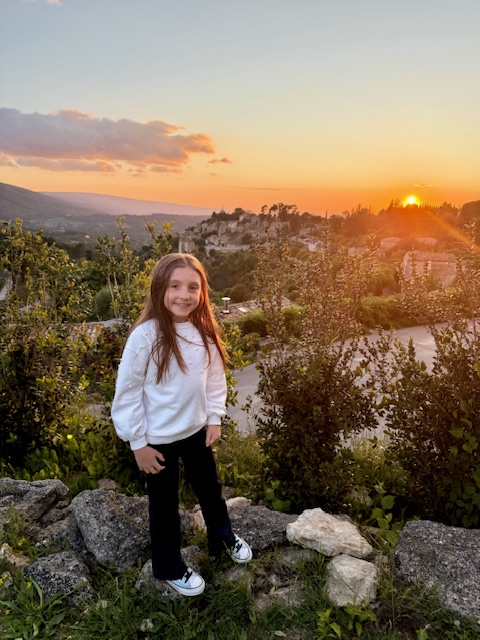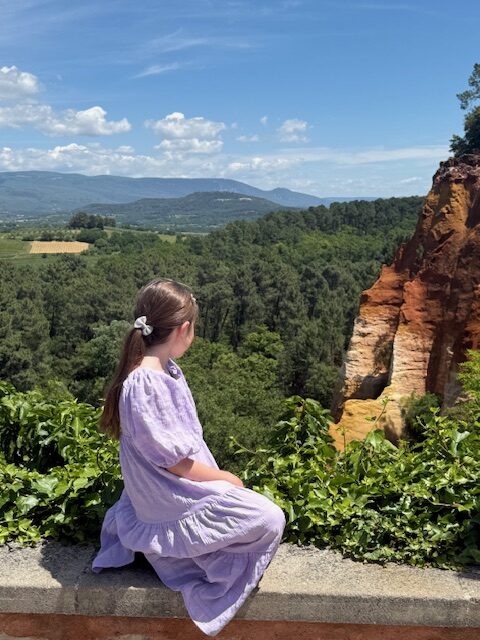


As anyone who knows me is well aware, I am obsessed with Greek and Roman history. And Provence (or Transalpine Gaul, as it was known in ancient times) is a perfect place to see an amalgam of Roman history and modern life. On our recent trip to Provence, we made it a point to take Josephine to the region’s most extraordinary Roman archaeological sites—not as a formal history lesson, but as an invitation to experience the past with her feet, her eyes, and her imagination.
She climbed, ran, touched ancient stone, and asked questions. And in doing so, she absorbed something far more lasting than dates or names: the understanding that we are simply walking where people have walked for thousands of years.
Pont Julien
Near Bonnieux, Vaucluse
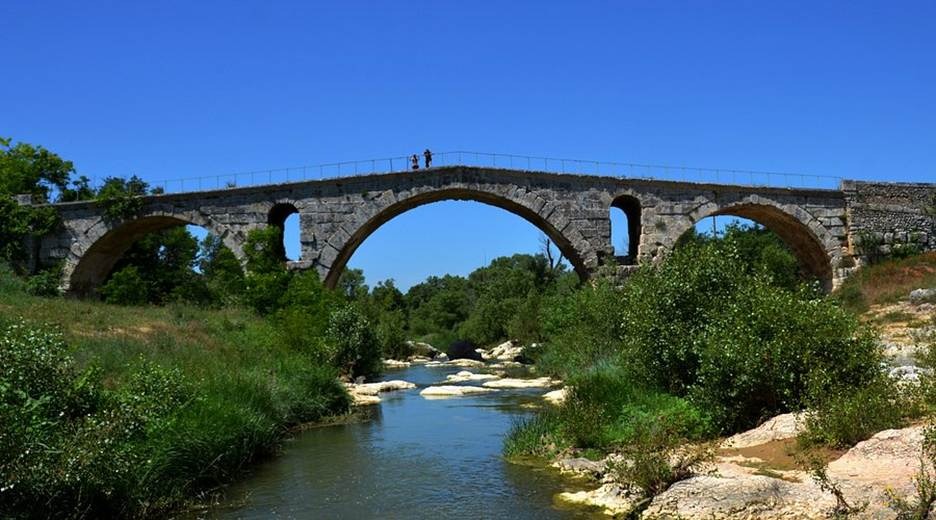
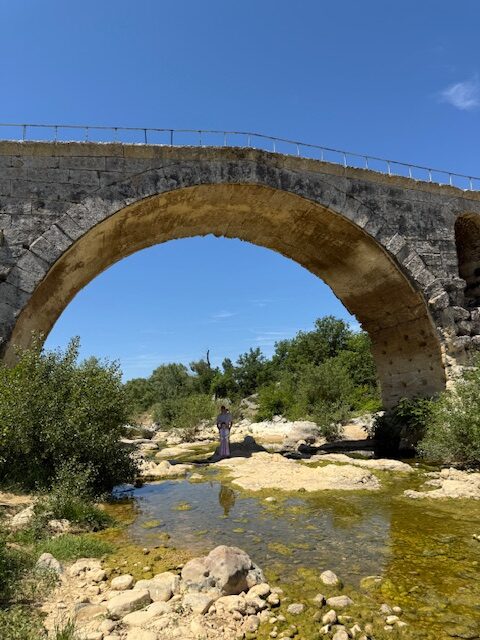
The Pont Julien may be modest compared to other Roman monuments, but it was the site Josephine fell for first. Located just outside the village of Bonnieux, this beautifully preserved Roman bridge dates to around 3 BCE and once carried the Via Domitia—Rome’s vital road linking Italy to Spain.
What makes Pont Julien so magical for children is its accessibility. There are no ropes, no velvet barriers, no hushed tones. Kids can walk straight across stones laid more than 2,000 years ago, still bearing the grooves of ancient cart traffic. And until just recently, cars used it as a major thoroughfare. That’s how sturdy Roman architecture was. How will modern highways measure up in the eyes of history?
Pont du Gard
Vers-Pont-du-Gard, Occitanie
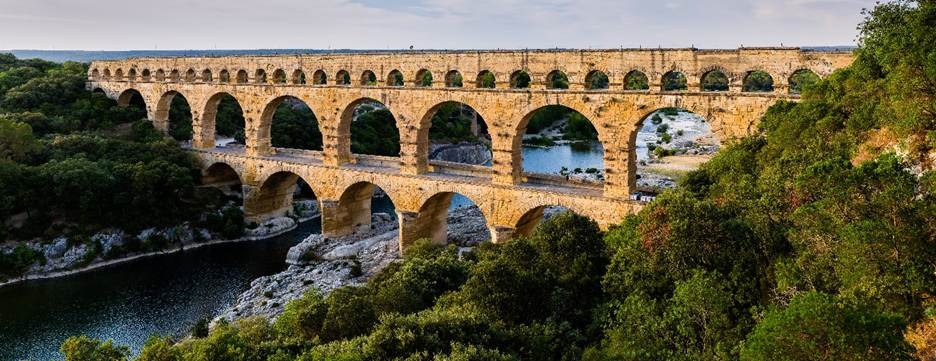
If Pont Julien felt intimate, the Pont du Gard was pure awe.
Rising nearly 160 feet above the Gardon River, this three-tiered Roman aqueduct once carried fresh water over 30 miles to the city of Nîmes. Built in the 1st century CE, it remains one of the most astonishing feats of Roman engineering in existence.
It was one of the coolest ruins we’ve ever visited. We didn’t really allot enough time to experience the park in full. As usual, we got there mid-afternoon. I think next time I’ll pack a picnic, so we can spend the day and wade in the water.
Absolutely — here’s a short, elegant entry you can drop into either post (or use as a standalone sidebar). It keeps the tone consistent and doesn’t overwhelm the narrative.
Orange: A Later Roman Theater and a Triumphal Arch
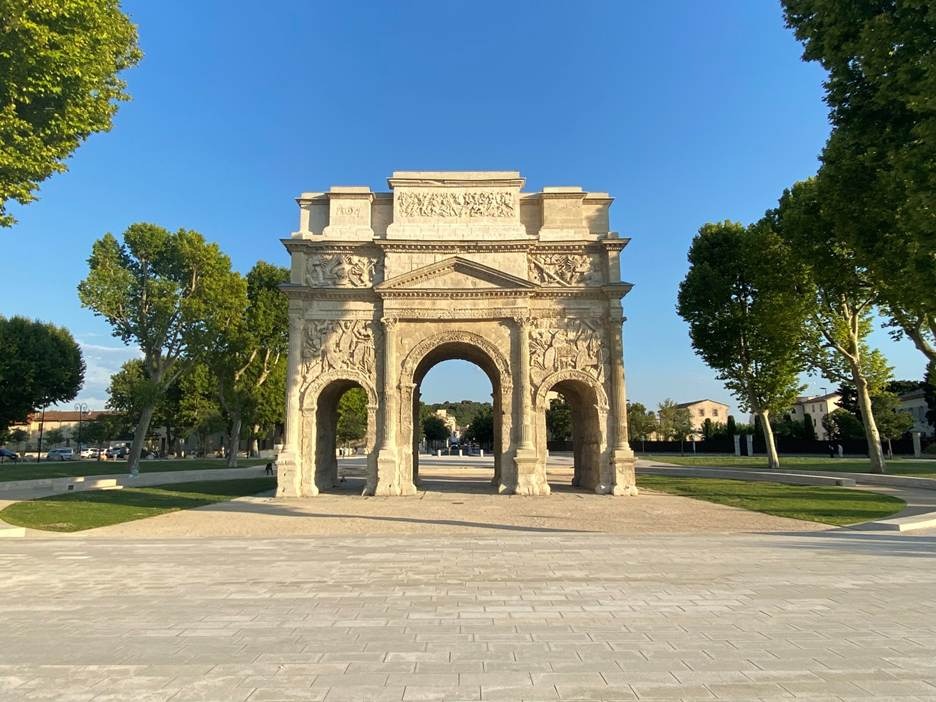
One of the most striking reminders of Rome’s presence in Provence is found in Orange, home to two extraordinary monuments that feel almost impossibly intact.
The Roman Theatre of Orange is among the best-preserved Roman theaters in the world. Its massive stage wall—still standing at nearly 120 feet high—creates an immediate sense of scale and permanence. Standing inside, it’s easy to imagine performances unfolding exactly as they did nearly 2,000 years ago. Even today, the space feels grand, dramatic, and alive.
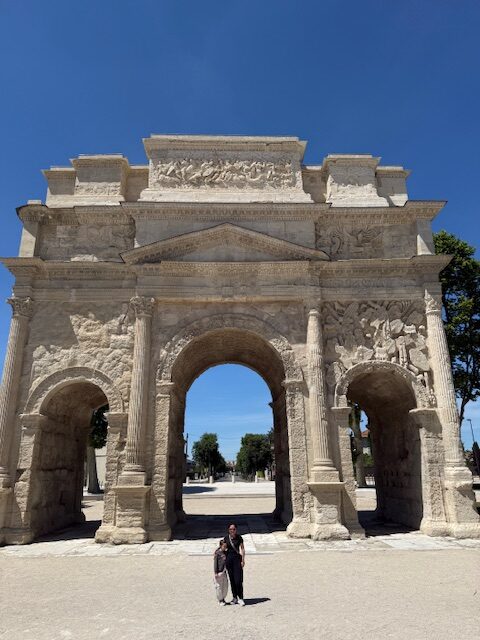
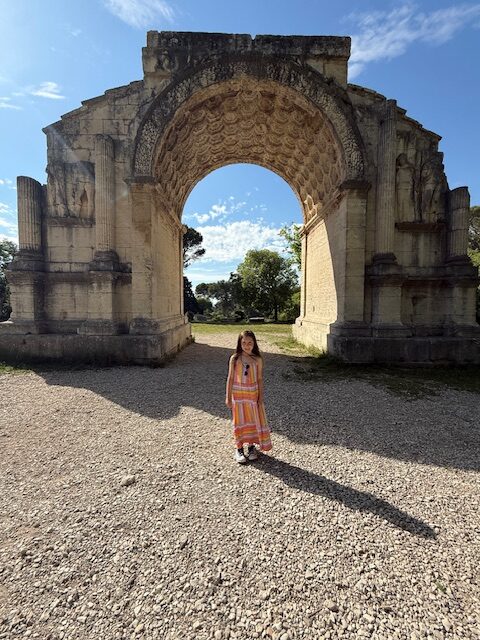
Just outside the historic center (a bit of a hike but worth the walk) stands the Triumphal Arch of Orange, built in the early 1st century CE to honor Roman veterans and military victories. Covered in intricate reliefs of armor, weapons, and battles, it quietly marks Orange as an important Roman crossroads—less flashy than some sites, but still super cool and a lot easier to get up close and see than other similar monuments, like the Arch of Constantine in Rome. This one is just out in the open to see and touch, and we all were quite impressed.
Arles
Roman Theater, Arena, and Forum Remains
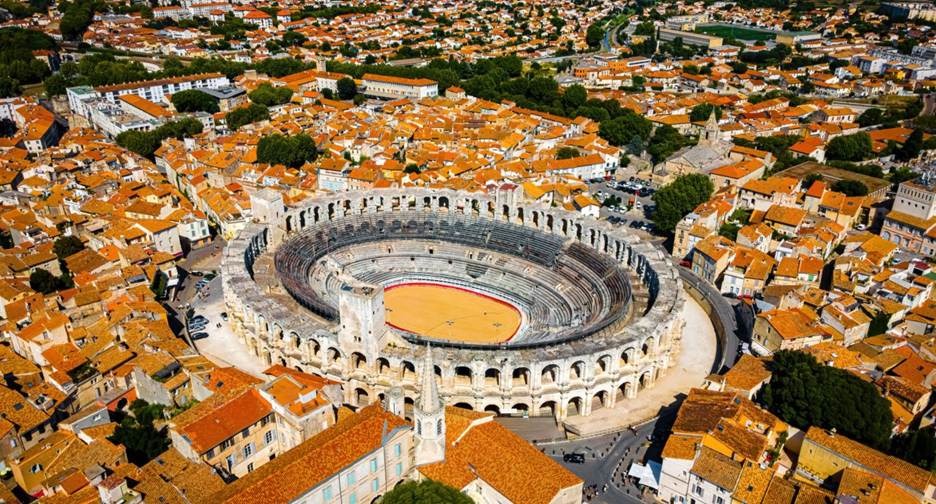
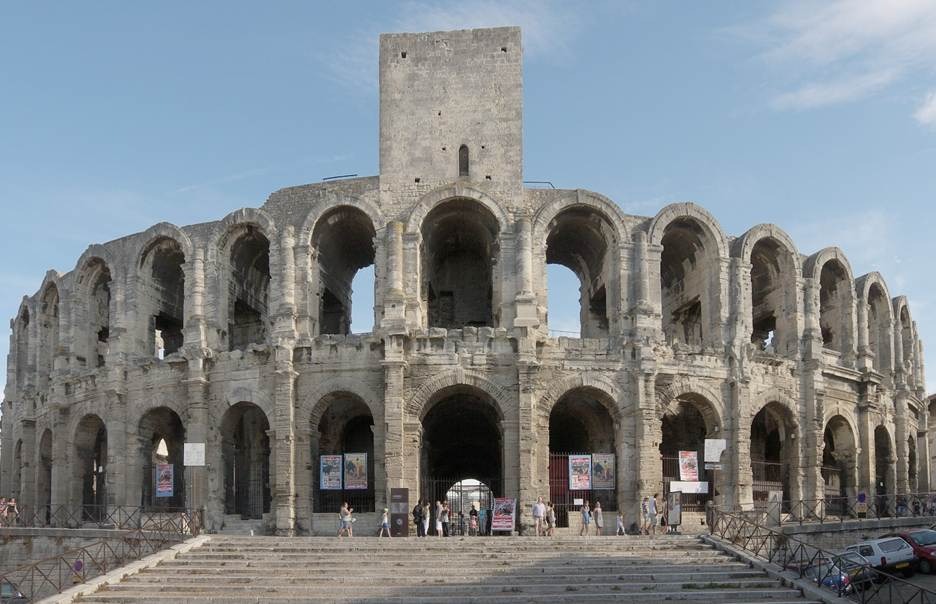
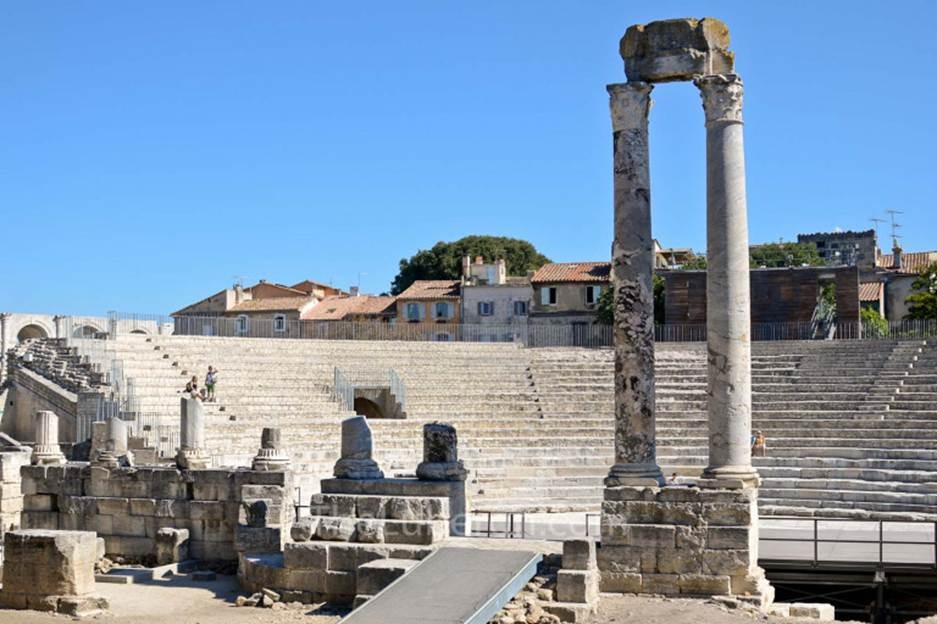
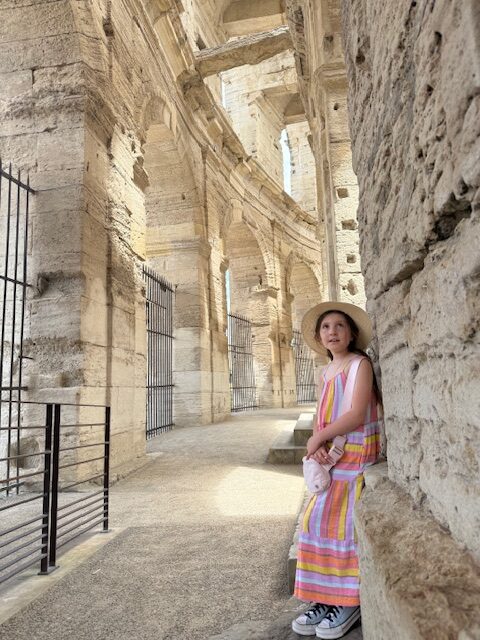
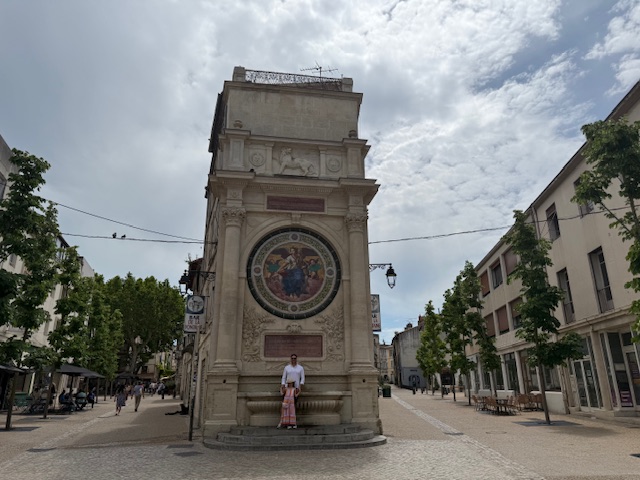
In Arles, Roman ruins aren’t tucked away—they are woven directly into daily life. Cafés sit beside columns. Children play near amphitheaters. Laundry lines hang within sight of ancient walls.
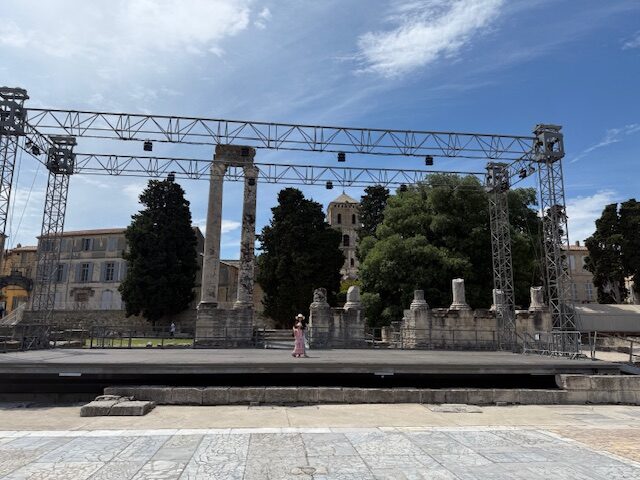
The Roman Arena, still used today for events, was a highlight for Josephine. She climbed the steps, peered into passageways, and imagined crowds roaring from seats that have held spectators for nearly 2,000 years. Nearby, the Roman Theatre offered a quieter moment—standing on a stage once used for performances long before microphones or electricity.
Arles beautifully reinforces the idea that history doesn’t end—it layers.
Glanum
Saint-Rémy-de-Provence
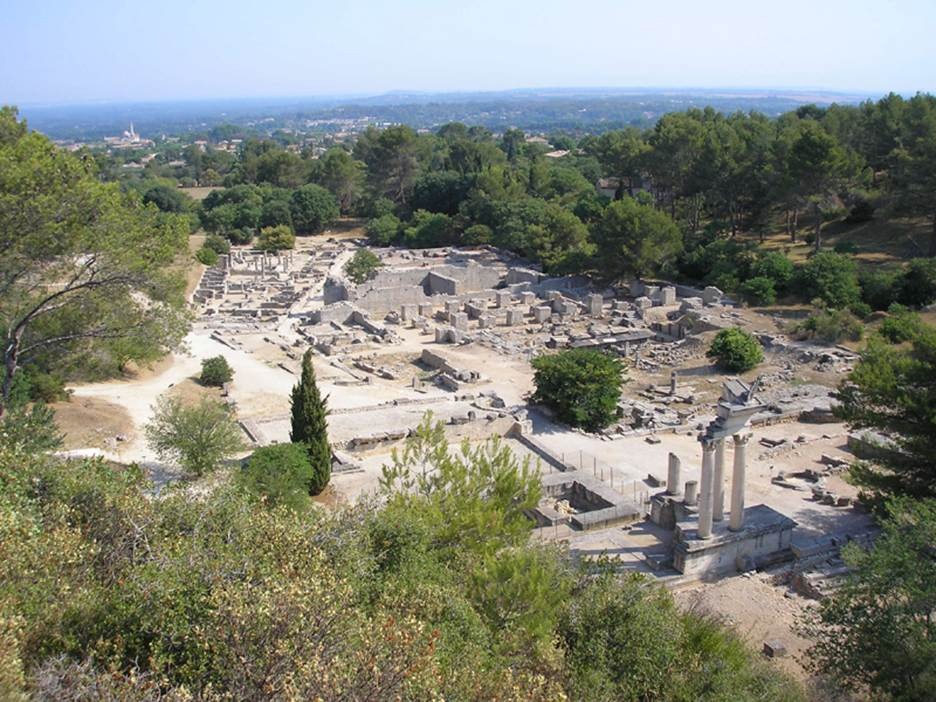
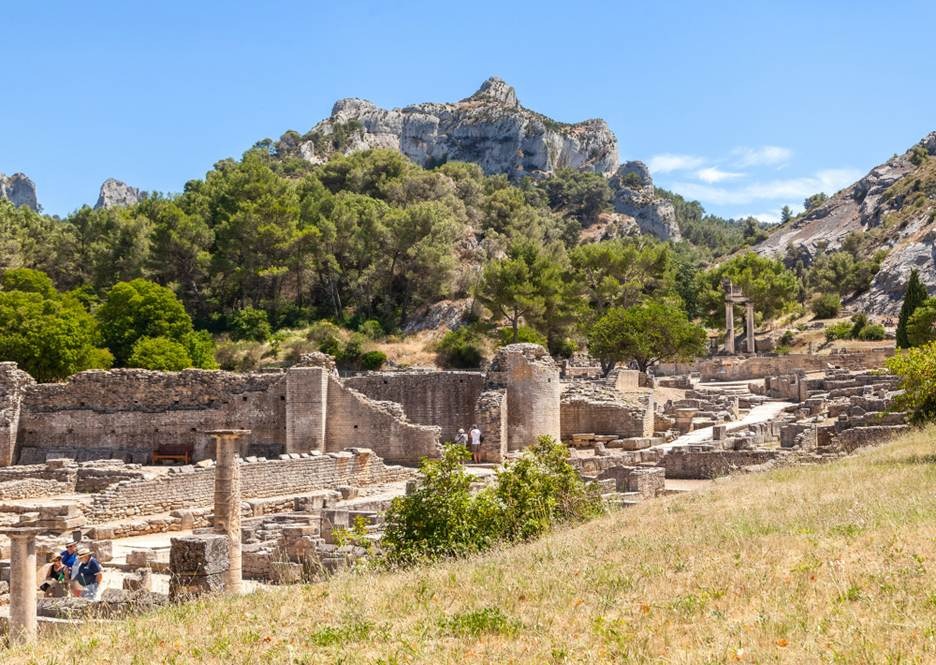
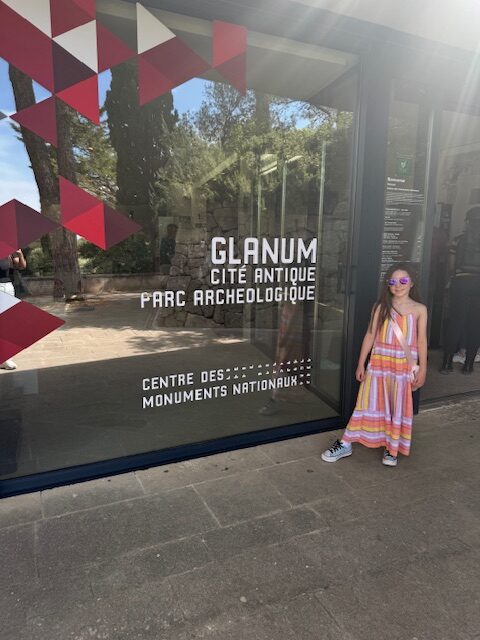
Set in a serene valley at the edge of the Alpilles, Glanum feels like a secret waiting to be discovered. This former Roman town includes temples, baths, fountains, and residential streets—all open, walkable, and wonderfully evocative.
What makes Glanum especially meaningful is its sacred spring, which was revered long before the Romans arrived. The spring was believed to have healing properties and drew people to this spot centuries earlier, making Glanum a place of worship and gathering well before it became a Roman settlement.
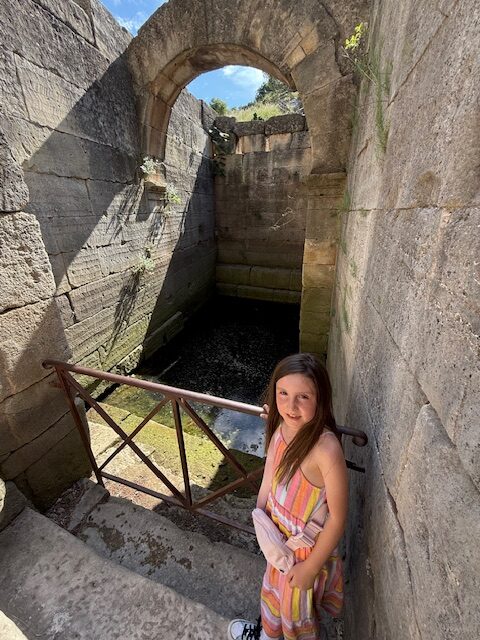
Here, Josephine wandered freely, hopping between stones and asking who lived in which buildings. The ruins are low enough for kids to feel immersed rather than overwhelmed, and the natural surroundings make it easy to imagine daily life unfolding centuries ago. She also got to watch some weird interpretive theatre in the round.
Glanum was perhaps the most powerful reminder that history is not abstract—it happened in places just like this, among families not so different from our own.
Why We Take Josephine to Places Like This
Traveling with children to historical sites isn’t about perfect behavior or memorizing facts. It’s about presence.
Sometimes, in our self-absorbed microcosms, we lose sight of the big picture. I want Josephine to be acutely aware that the world didn’t start with us. We are part of a very long human story, and maybe she can create something that people will look at in awe several millennia from now.